What is hydromulching?
Hydromulching combines water, mulch, seed, fertiliser and a binding agent in a slurry. A tracking dye helps the application technician see where the hydromulch has been applied for even coverage. The mix is sprayed onto the soil, where the mulch and binder help protect the surface while vegetation establishes.
Our Revegetation Contractors team can assess your site and talk through the preparation, seed mix and aftercare it needs.
This differs from laying turf or broadcasting dry seed because the materials arrive together in a sprayed layer. The seed sits within the mulch rather than on top of bare soil. A soil test and site look help us select a suitable approach for the conditions.
Hydromulching vs hydroseeding vs spray grass
Hydroseeding and spray grass, sometimes called spray on grass or hydro grass, describe applying seed with water. Hydromulching also includes mulch and binder. The mulch holds moisture around the seed, helps regulate soil temperature and makes it harder for animals and birds to reach the seed before germination.
The added mulch and binding agents also give the soil surface short term protection from rain and wind. For other ways to place seed, see our air seeding and drill seeding service.
The names are sometimes used interchangeably, so it helps to confirm what is in the mix. The main difference is the mulch and binder, not simply the use of spraying equipment. We can explain which method fits the slope, soil and vegetation outcome you need.
Where it works best
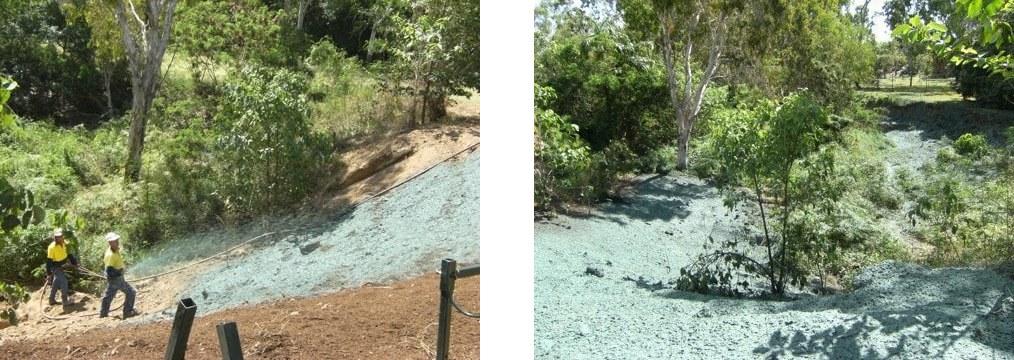
Hydromulching suits sites with limited machinery access, including steep banks, creek and drain slopes, and road batters. Binders in the slurry help the mixture adhere to the slope.
It can be part of a wider erosion and sediment control plan with Enkamat erosion control matting, silt fencing and stormwater management.
Spray application can reduce the need to take machinery across difficult ground. It is useful where a tractor and drill cannot safely reach the full treatment area. Access, slope, drainage and the surrounding environment still need assessment before work starts.
Site preparation
We recommend a soil test before applying hydromulch. A rough planting surface improves water infiltration and may be achieved by scarifying the surface with a comb blade on a grader.
Where growth is required promptly, the slope may need watering to achieve a saturated soil profile before spraying. The site assessment helps determine the preparation and watering approach.
Loose debris and other obstructions may need attention before application. The prepared surface should allow the slurry to make contact with the soil. Planning may also consider erosion and sediment controls while the vegetation establishes.
How the spray process works
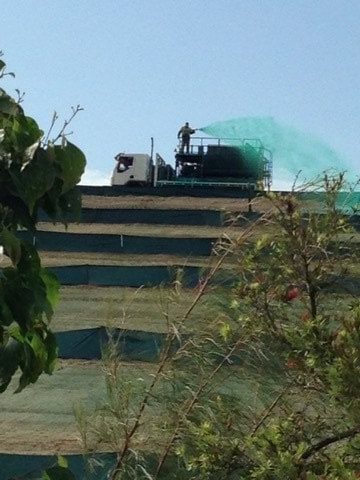
The hydromulch seed, mulch, fertiliser, binder and water are mixed into a slurry, with tracking dye added to show coverage. Equipment sprays the mixture across the prepared surface. The process can reach awkward slopes and areas away from vehicle access, subject to the site and equipment.
The operator tracks coverage as the spray is applied, using the dye as a visual guide. Once in place, the binder helps the mulch layer stay on the treated surface. Seed selection, fertiliser and any further treatment are based on the site rather than a fixed recipe for every project.
Maintenance after spraying
Any irrigation needed for maintenance should be installed before the mulch is sprayed. It should apply water evenly without eroding the mulch. Watering and maintenance fertiliser can then be planned around site conditions, weather and the selected seed.
Check the treated area after rainfall and watering so any erosion or uneven coverage can be considered early. New vegetation needs suitable moisture while it establishes, but too much water or concentrated flow can disturb the surface. Ongoing care depends on what the inspection shows.
Talk to Townsville or Cairns
Tell us about your slope, soil, access and the vegetation you want to establish. We can assess the site, explain the preparation and provide a tailored quote.
Call Townsville on (07) 4755 1200, call Cairns on (07) 4056 3577, or send an enquiry through the form below. You choose the next step that suits your project.
Benefits
- Mulch and binder protect the soil surface while providing conditions for vegetation growth.
- The sprayed application suits steep banks and sites with limited machinery access.
- Seed, mulch, fertiliser and binder are applied together in one slurry.
Common questions
What is the difference between hydromulching and hydroseeding?
Hydroseeding sprays seed with water. Hydromulching adds mulch and binding agents, which hold moisture around the seed, help regulate soil temperature and give short term protection from rain and wind.
What is spray grass?
Spray grass, also called spray on grass or hydro grass, describes seed applied by spraying. Depending on the mix and site, it may refer to hydroseeding or hydromulching.
What is hydromulch seed?
Hydromulch seed is the seed included in the hydromulching slurry. We choose the seed for the site and project, then mix it with water, mulch, fertiliser and binder for spraying.
How much does hydromulching cost?
There is no fixed price. We price the work for your site after a soil test and site look. Call Townsville on (07) 4755 1200 or Cairns on (07) 4056 3577 for a quote.
How long until grass establishes?
Establishment time varies with the seed, soil, weather, watering and site conditions. We can explain what to expect for your site and the maintenance it will need.
Do you cover Townsville and Cairns?
Yes. We have branches in Townsville and Cairns and work on sites across North Queensland. Call your nearest branch to discuss your site.